
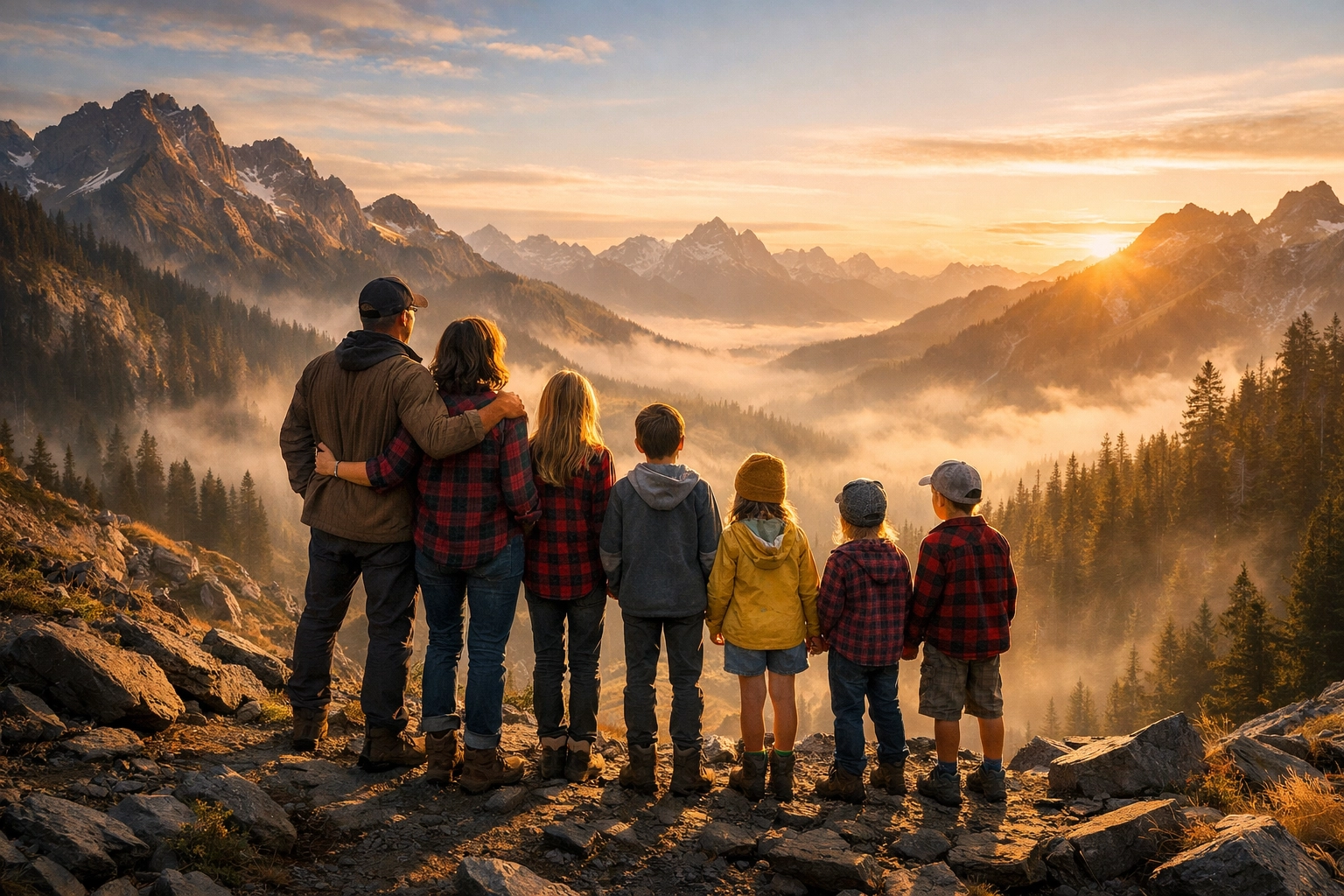
If you had told me a few years ago that our family of seven, that’s two adults and five energetic kids, would be living off-grid in the rugged mountains of the Pacific Northwest, I probably would’ve laughed. Not because I didn’t want it, but because I didn't think we could afford it.
Like most people, we were stuck in the "someday" trap. We spent our evenings scrolling through Zillow, looking at beautiful mountain plots, only to be crushed by the reality of traditional bank loans. Have you ever tried to get a bank to finance raw, off-grid land? It’s nearly impossible. They want 20% to 50% down, a perfect credit score, and a detailed plan for a conventional house that we had no interest in building.
But then, something shifted. We decided to stop asking the banks for permission to live our lives. We found a different way, and apparently, a lot of you are looking for that same escape. Recently, a video of our journey hit 9 million views on TikTok. It turns out, there are millions of people tired of the rat race, wondering if they can actually buy land when they don’t have a massive savings account or a high-paying corporate job.
The answer is a resounding yes. Here is exactly how we bought our piece of paradise without ever stepping foot inside a bank.
The Reality of the "Off-Grid" Dream
Moving off-grid isn't just about pretty sunsets and wood-burning stoves. For us, it was a necessity born out of a desire for freedom. We wanted to raise our kids with dirt under their fingernails and the silence of the forest in their ears. But with seven mouths to feed, every penny mattered.
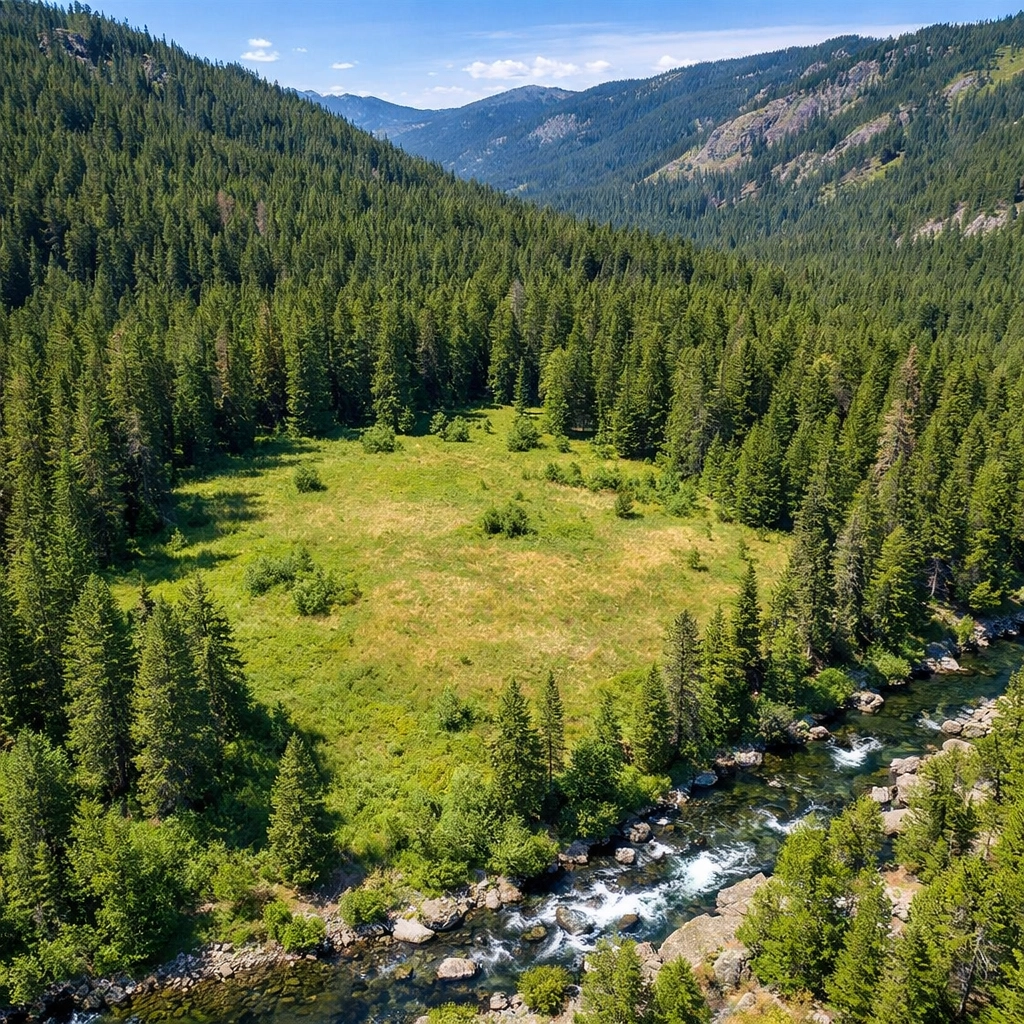
When we started looking for land in the Pacific Northwest, we weren't looking for a mansion. We were looking for a foundation. The problem was that the "system" isn't set up for people like us. Most financial institutions see raw land as a "speculative investment." They don't see a home; they see a risk.
We knew that if we were going to make this work on a shoestring budget, we had to get creative. That’s when we discovered the magic word: Owner Financing.
What is Owner Financing? (And Why It’s a Game Changer)
If you haven’t heard of owner financing (or seller financing), it’s basically a setup where the person selling the land acts as the bank. Instead of you going to a big-name lender to get a mortgage, you make your monthly payments directly to the seller.
This was the "secret sauce" for our family. Here’s why it works so well for homesteaders:
- Low Down Payments: While banks might ask for $30,000 or $50,000 down for land, many owners are willing to accept much less. Some sellers specialize in land contracts and may only ask for a few hundred or a few thousand dollars to get you started.
- No Credit Checks (Usually): Most private sellers aren't obsessed with your FICO score. They care that you have the down payment and that you’re committed to making the monthly installments.
- Faster Closing: There’s no waiting for six weeks for a bank appraiser or a loan officer to approve your file. You can often close the deal in a matter of days.
- Flexibility: Everything is negotiable. Want a lower interest rate in exchange for a slightly higher down payment? You can ask. Want to pay it off early without a penalty? You can write that into the contract.
How We Found Our Mountain Plot
We didn’t just stumble upon our land by accident. We had to be intentional. If you’re looking to do the same, here is the process we used to find a seller willing to work with us.
1. Look Beyond the Major Real Estate Sites
While sites like Zillow and Redfin are great for houses, they aren't always the best for finding off-grid land deals. We started looking at specialized land-selling websites like LandWatch or Land and Farm. More importantly, we looked for keywords like "Seller Financing," "Owner Carry," or "No Credit Check."
2. Connect with Local Communities
Sometimes the best deals aren't listed online at all. We spent time researching the specific areas of the PNW we loved. Often, local hardware stores or community boards have flyers for land for sale by owner. You can also check out our resources (and the Off Grid On A Shoestring Budget workbook) on our Linktree: https://linktr.ee/7kinhomestead. Our community is coming soon, but for now, Linktree is the best place to find everything we currently have available.
3. Be Upfront About Your Budget
When we found a piece of land we loved, we didn't pretend to be wealthy. We were honest. We explained we were a large family looking to build a sustainable life and that we were looking for a seller-financed deal. You’d be surprised how many land owners are actually retirees who would rather have a steady monthly check coming in than a lump sum of cash.
The Technical Side: Crossing the T's and Dotting the I's
Even though you aren't using a bank, you still need to protect yourself. Buying land is a huge commitment, especially when you have five kids relying on you.
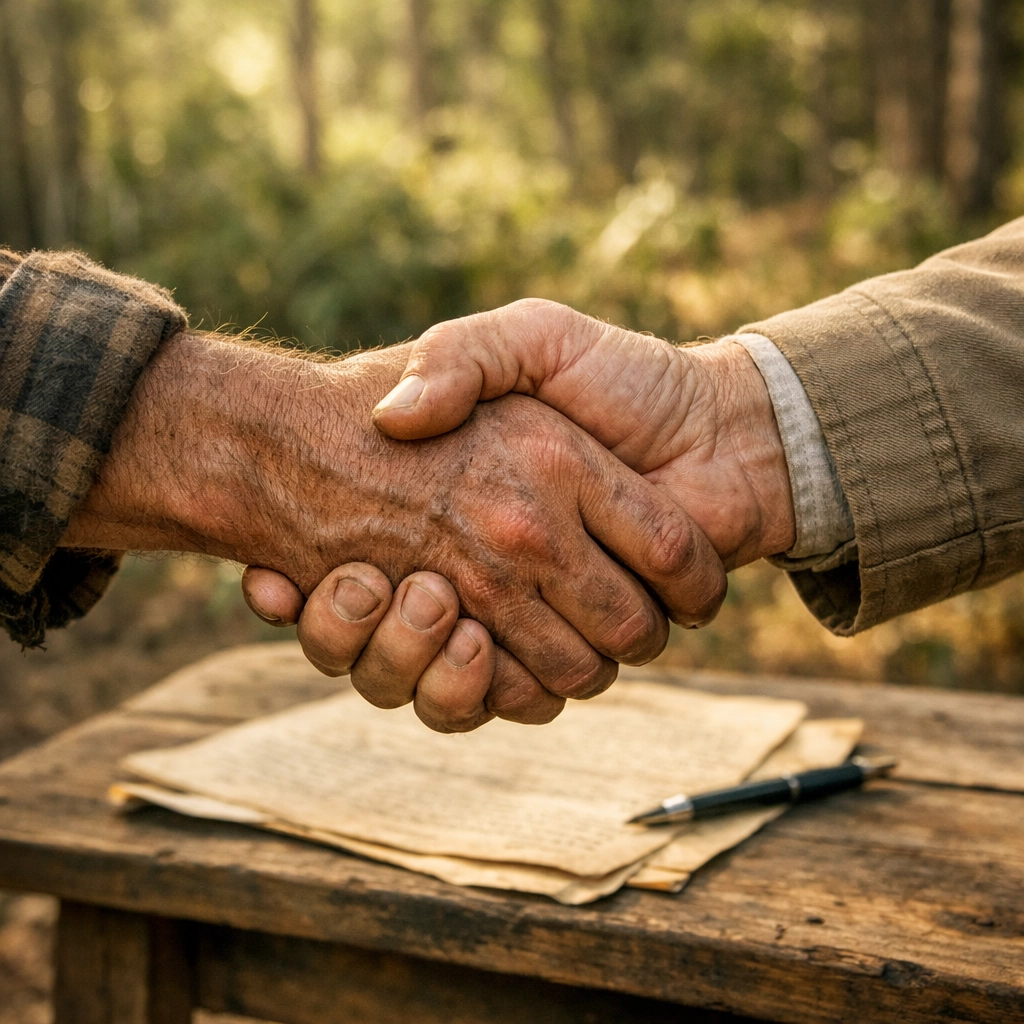
When we negotiated our deal, we made sure to have a clear contract. This usually comes in the form of a Land Contract or a Deed of Trust.
- The Land Contract: You make payments, and once the final payment is made, the seller hands over the deed.
- The Deed of Trust: You get the deed upfront, but the seller holds a "lien" on the property. If you stop paying, they can take the land back.
We made sure to check for things like zoning laws (can you actually live in an RV or a tiny home while you build?), water rights, and easements. In the mountains, making sure you have a legal way to get to your property is vital! If you're feeling overwhelmed by the legalities, you can check out our resources (including the Off Grid On A Shoestring Budget workbook) here: https://linktr.ee/7kinhomestead.
Living Off-Grid on a Shoestring Budget
Buying the land is just the first step. The real challenge: and the real fun: begins when you move onto it.
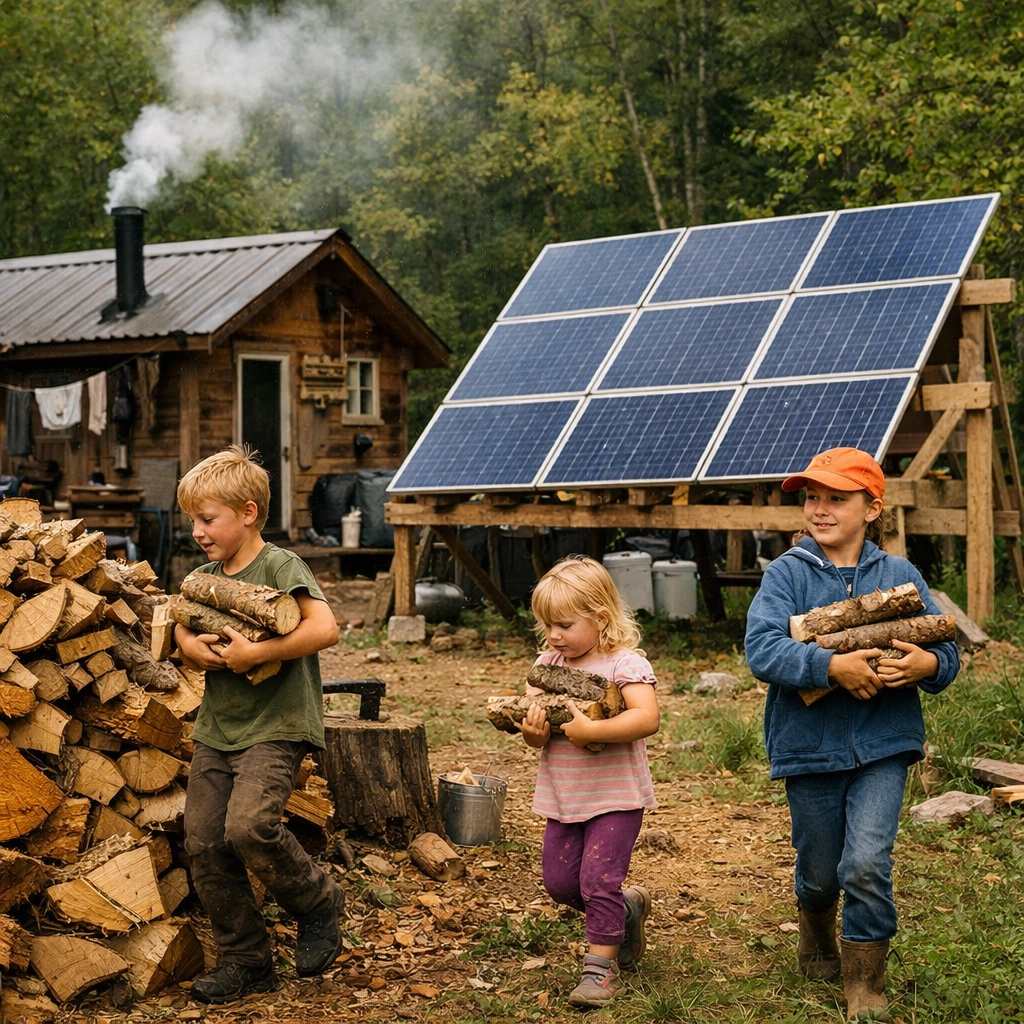
One of the biggest misconceptions we see in our comments on TikTok is that you need $100k in the bank to start an off-grid life. That couldn't be further from the truth. We started with very little. We prioritized the basics: shelter, water, and heat.
Living on a shoestring budget means learning to do things yourself. It means buying used equipment, learning how to compost, and understanding how to harness solar power without a $20,000 professional installation. It’s a scrappy life, but it’s a beautiful one.
You Can Do This Too
I know it feels scary. I know the "experts" tell you that you need to save for ten years before you can even think about buying property. But our family is living proof that if you’re willing to think outside the box and forgo the traditional banking route, the mountains are waiting for you.
We didn’t have a massive inheritance. We didn't have a perfect credit score. We just had a dream and the willingness to ask a seller, "Would you be open to financing this for us?"
If you're tired of the city noise, the endless bills, and the feeling that you're working just to stay afloat, maybe it’s time to look into owner financing. Whether you’re a single person or a family of seven like us, the dream of sustainable living is within your reach.
Take the First Step Today
We know how overwhelming it is to start. That’s why we’ve put everything we’ve learned: all the budget hacks, the land-buying tips, and the off-grid secrets: into one place.
If you’re ready to stop dreaming and start doing, grab our "Off Grid On A Shoestring Budget" Workbook. It’s designed to help you navigate the financial side of homesteading without losing your mind (or all your money).
Get the Off Grid On A Shoestring Budget Workbook here via our Linktree!
Don't let the banks hold the keys to your future. There is a way out, and it starts with one small step. We’ll see you on the mountain!
Still have questions about how we make it work? Find our current resources (including the Off Grid On A Shoestring Budget workbook) and the best ways to reach us on our Linktree: https://linktr.ee/7kinhomestead. Our community is coming soon. We’re all in this together! For more information on our site policies, visit our Terms and Conditions.
Watch the video this post is based on:
https://youtube.com/watch?v=
Check out our workbook for more details.